
⚡ FIBC Products
Type D Big Bag (Static Protective)
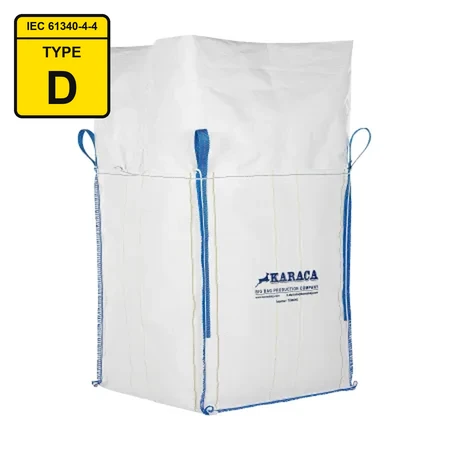
Type D static protective FIBC bulk bags to IEC 61340-4-4 prevent hazardous electrostatic discharges in combustible dust and gas atmospheres without the need for earthing.
Technical Specifications
Type D Big Bag (Static Protective) Specs
Type Classification
Type D (Static Protective)
Earthing
Not required
Area of Use (Dust)
Zones 21, 22
Area of Use (Gas)
Zones 1, 2 (IIA/IIB, MIE ≥ 0.14 mJ)
Charging Current
≤ 3 µA
Compatible Liner
Type L2 only
Type Test
At least 200 ignition attempts at 20% and 60% RH
Type D Big Bag: Static Protection Without Earthing
Type D big bag is made of static protective fabric that prevents sparks, brush discharges and propagating brush discharges without being earthed. Its electrostatic classification follows IEC 61340-4-4.
Quasi-conductive yarns woven into the fabric release the accumulated charge safely into the air through low-energy corona discharges.
Unlike a Type C big bag, it needs no earthing connection during use, which removes the risk of a forgotten or broken earth connection. It is widely used, especially in the US market.
Where Can It Be Used?
Under IEC 61340-4-4, a Type D big bag may be used in:
- Zones 21 and 22 (explosive dust atmospheres)
- Zones 1 and 2 (explosive gas atmospheres): gas groups IIA and IIB with a minimum ignition energy of 0.14 mJ or more
- Filling and discharge operations with charging currents of up to 3 µA
IEC 61340-4-4 does not cover Zones 0 and 20 or gas group IIC (e.g. hydrogen).
Rules for Use
- No earthing — The big bag is not connected to an earth bonding point
- Earth nearby conductors — All conductive objects within 1 m of the big bag (metal frames, hoses, personnel) must be earthed during filling and discharge
- Liner — Only Type L2 liners (surface resistivity 10⁹–10¹² Ω) may be used; liners with a conductive layer must not be used in a Type D big bag
- Cleanliness — Contamination such as water, oil or rust can impair the charge-dissipating properties of the fabric
- Label — Every Type D big bag carries the IEC 61340-4-4 number, the Type D designation, the static protection symbol and the note that it does not require earthing; markings such as “Type CD” or “Type D+” are not permitted
Type C or Type D?
Type C
- Conductive yarns carry the charge to the earth bonding point
- Earthing is mandatory
- Compatible liners: Type L1 or L2
Type D
- Static protective fabric dissipates the charge safely without earthing
- No earthing required
- Compatible liner: Type L2 only
- In gas atmospheres, limited to a minimum ignition energy of 0.14 mJ or more and charging currents of up to 3 µA
If reliable earthing is difficult at your site, or you want to remove the risk of earthing errors, Type D is suitable. If the minimum ignition energy of the gas is below 0.14 mJ or the charging current exceeds 3 µA, use Type C. The final choice is made in your site risk assessment.
How Is It Tested?
Under IEC 61340-4-4, a Type D big bag is filled with charged polypropylene pellets while at least 200 ignition attempts are made with an ethylene–air mixture with a minimum ignition energy of 0.14 mJ. A single ignition means the big bag does not qualify as Type D.
Tests are carried out at both 20% and 60% relative humidity. A type qualification certificate is normally valid for three years.
Customization Options
Configure to Your Needs
Type L2 Liner
Surface resistivity 10⁹–10¹² Ω (IEC 61340-4-4)
Filling Spout
For controlled filling
Discharge Spout
For controlled discharge
Product Gallery
Type D Big Bag (Static Protective)
Application Areas
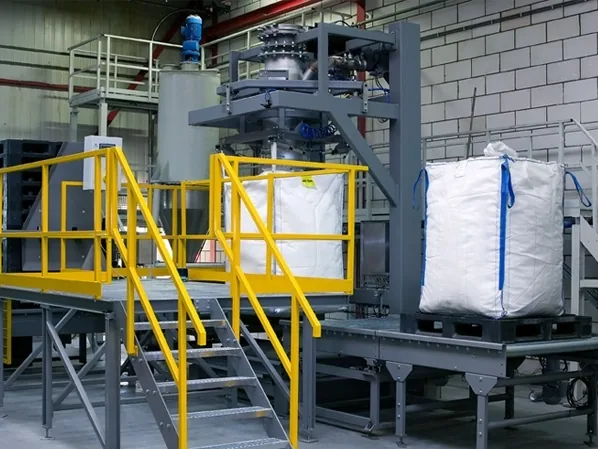
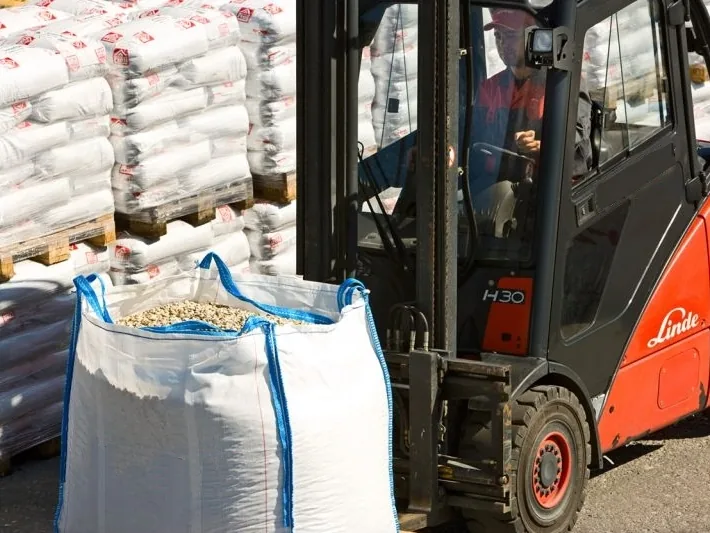
Where is Type D Big Bag (Static Protective) Used?
Frequently Asked Questions
About Type D Big Bag (Static Protective)
No. However, all conductive objects within 1 m of the big bag must be earthed during filling and discharge.
No. IEC 61340-4-4 does not cover gas group IIC, which includes hydrogen and acetylene.
Yes, but only a Type L2 liner. A liner does not change the type of the big bag.
If reliable earthing is difficult at your site, or you want to remove the risk of earthing errors, Type D is suitable. If the minimum ignition energy of the gas is below 0.14 mJ or the charging current exceeds 3 µA, use Type C. The final choice is made in your site risk assessment.
Related Products
UN Certified Big Bag
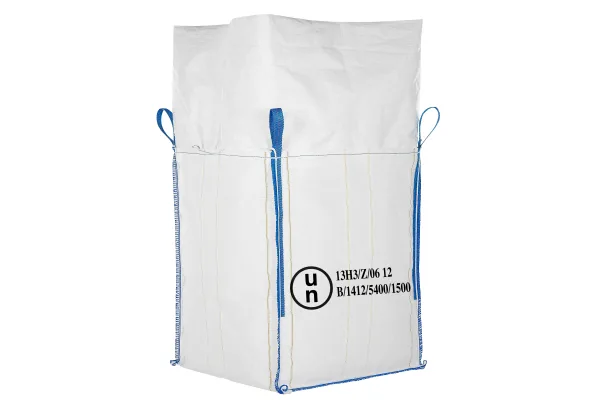
UN/ADR approved FIBC bulk bags (UN 13H1 to 13H4) enable safe international road, rail, and sea transport of solid dangerous goods.
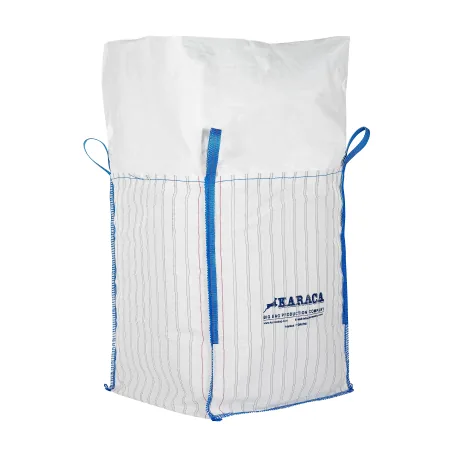
Ventilated Big Bag
Ventilated big bags let the product inside breathe through ventilation openings across the fabric surface. They prevent sweating, mould and spoilage when transporting and storing produce that releases moisture and heat, such as potatoes, onions and firewood.
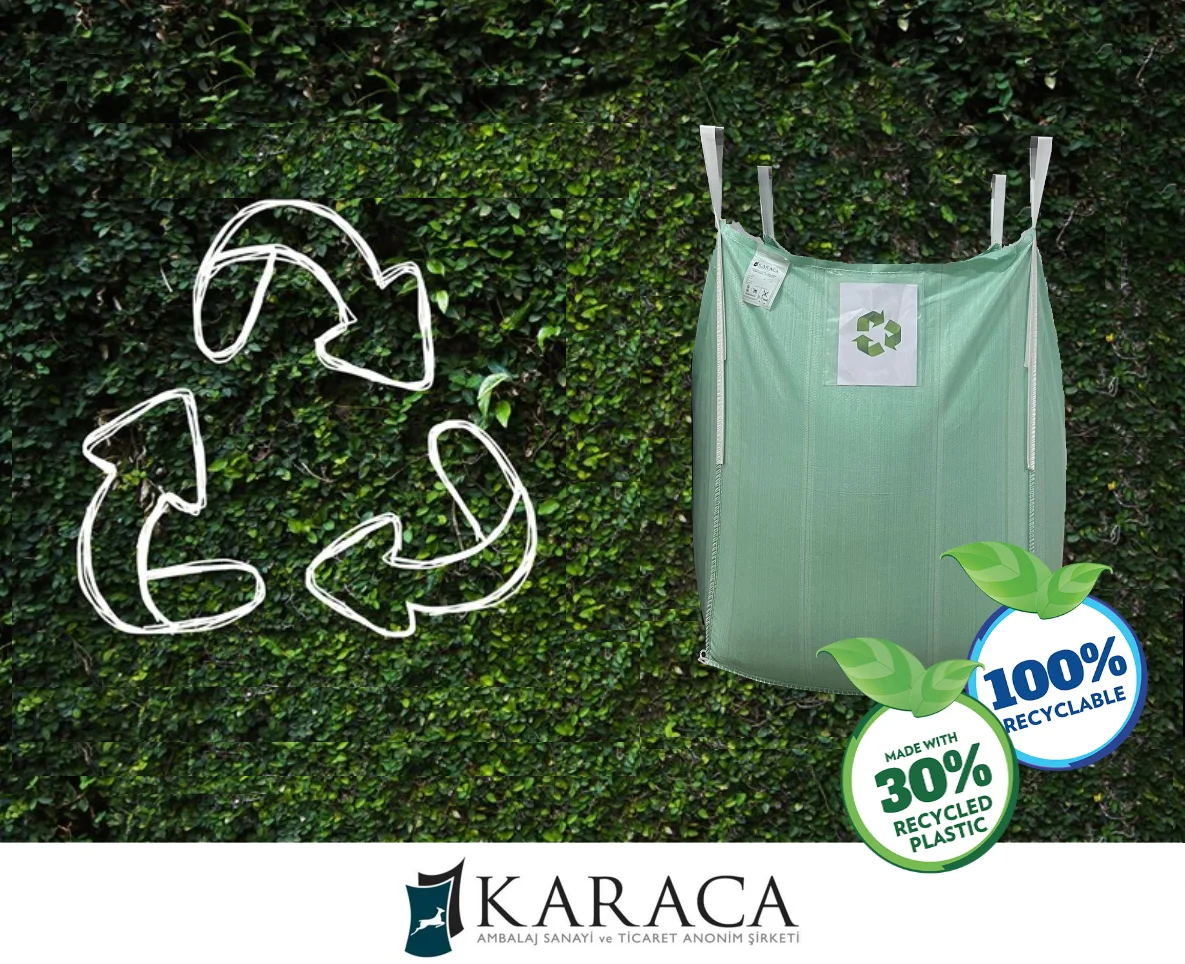
Recycled PP (rPP) Big Bag
Big bags made with 30% post-industrial recycled polypropylene: less virgin plastic, mono-material PP, suitable for the PP recycling stream.